

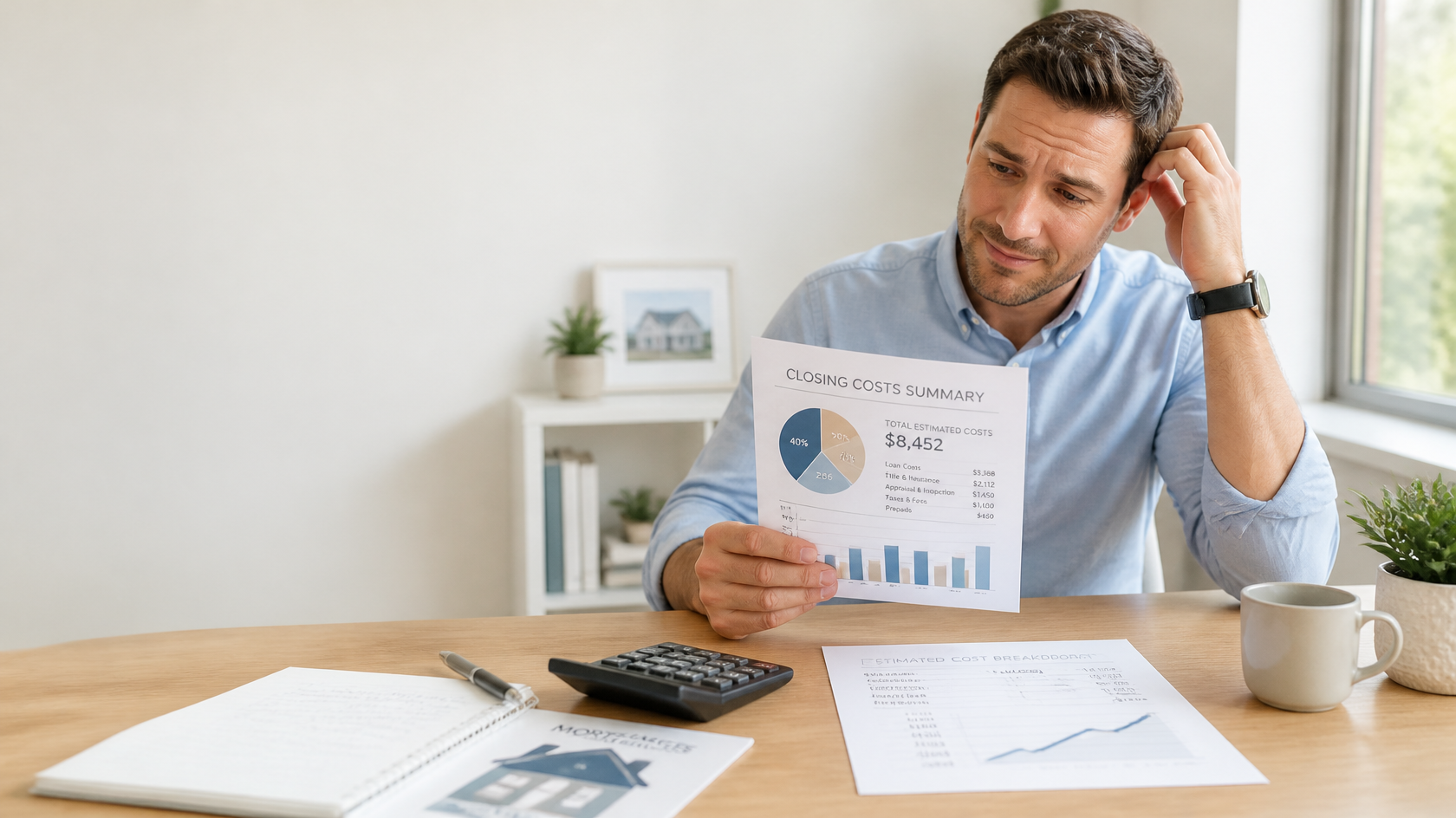
What Closing Costs Should You Expect When Buying or Selling a Home in Florida?
One of the most common questions we hear from buyers and sellers is, “How much should I expect to pay in closing costs?”
The answer depends on several factors, including the property's location, financing, purchase price, and how the contract is negotiated.
I'm Keith McPherson, Broker and Owner of Blue View Real Estate in West Palm Beach, Florida. I've been helping buyers and sellers navigate real estate transactions throughout South Florida since 2015.
One thing I've learned is that closing costs aren't simply expenses you have to accept. In many cases, there are opportunities to negotiate them, reduce your out-of-pocket expenses, or structure a transaction more favorably.
Let's look at what buyers and sellers should expect, including some real examples from transactions we've handled.
What Are Closing Costs?
Closing costs are the expenses associated with completing a real estate transaction, beyond the property's purchase price.
For buyers, these expenses typically include:
- Loan origination and lender fees
- Appraisal and credit report fees
- Title insurance and settlement charges
- Prepaid homeowners insurance
- Property taxes and escrow deposits
- Prepaid mortgage interest
- Mortgage insurance, when applicable
For sellers, closing expenses commonly include:
- Real estate commissions
- Documentary stamp taxes
- Owner's title insurance, depending on the contract
- Title company and settlement fees
- Prorated property taxes
- HOA or condominium fees
- Outstanding liens or other obligations
The important thing to understand is that not every transaction has the same closing costs, even when properties sell for identical prices.
How Much Are Closing Costs for Buyers in Florida?
You'll often hear that buyers should budget approximately 2% to 5% of the purchase price for closing costs.
For a $400,000 home, that would mean approximately $8,000 to $20,000.
While this provides a general starting point, I don't believe buyers should rely on percentages alone.
Different lenders charge different fees, and loan programs have different requirements. Property taxes and insurance can also significantly affect the amount needed at closing.
At Blue View Real Estate, we prefer to have the lender prepare an actual estimate based on the buyer's circumstances.
Your Down Payment Is Separate From Closing Costs
One common misconception is that the down payment represents everything a buyer needs to purchase a home.
Depending on the financing program, minimum down payments may include:
- FHA loans: As little as 3.5% for qualifying borrowers.
- Conventional loans: Certain programs allow as little as 3% down.
- VA loans: Eligible borrowers may qualify for 100% financing.
For example, a buyer purchasing a $400,000 home using FHA financing may need a $14,000 down payment, plus closing costs.
However, here's something I regularly explain to buyers:
Just because you have enough money for the down payment but not all the closing costs doesn't necessarily mean you cannot purchase a home.
There may be opportunities to negotiate assistance from the seller.
Can Sellers Pay a Buyer's Closing Costs?
Absolutely, and this is something we regularly explore when negotiating offers.
Depending on the property, market conditions, and seller's motivation, we may be able to negotiate a seller credit toward the buyer's closing expenses.
For example, imagine purchasing a $400,000 home with $12,000 in estimated closing costs.
If we negotiate a $10,000 seller contribution, the buyer may only need to cover the remaining $2,000 in eligible closing expenses, in addition to their required down payment.
Sometimes we can negotiate all the eligible closing costs. Other times, even a smaller contribution makes a significant difference.
How Much Can a Seller Contribute?
Seller contribution limits depend on the loan program.
- FHA loans generally allow contributions of up to 6% toward eligible expenses.
- Conventional loans may allow 3% to 9%, depending on down payment and occupancy.
- VA loans have specific concession rules, including a 4% limit on certain concessions.
These are maximum limits, not guaranteed contributions. The lender must approve the credits, and they generally cannot exceed eligible expenses.
Understanding these guidelines helps us structure offers that make financial sense for our buyers.
A Real Example: Purchasing a Home With Zero Money Out of Pocket
One of my favorite transactions involved a buyer using VA financing.
Because the buyer qualified for 100% financing, they didn't need a traditional down payment.
We negotiated seller contributions to cover their eligible closing expenses.
What made this transaction particularly interesting was that the buyer also had an outstanding car loan.
Through coordination with the lender and an approved transaction structure, we were able to arrange for the remaining car loan balance to be paid off as part of the closing.
The buyer purchased their home without bringing money out of pocket to closing and had their remaining car loan paid off.
That was an exciting transaction.
Of course, this isn't possible with every loan. Seller concessions, debt payoffs, and financing arrangements must comply with the lender's requirements and applicable loan-program guidelines.
But it demonstrates why buyers should explore their options before assuming they cannot afford homeownership.
Sometimes, how a transaction is structured makes all the difference.
Who Pays for Title Insurance in Florida?
One closing expense that frequently generates questions is title insurance.
What's interesting about South Florida is that the customary responsibility for paying the owner's title insurance policy varies by county.
Palm Beach County
In Palm Beach County, sellers customarily pay for the owner's title insurance policy in many resale transactions.
The seller will also commonly select the title company handling the closing.
Broward and Miami-Dade Counties
In Broward and Miami-Dade counties, buyers commonly pay for the owner's title insurance policy and select the closing company.
Because we work throughout South Florida, we occasionally encounter buyers from Broward or Miami-Dade who are accustomed to paying this expense.
When purchasing in Palm Beach County, they may propose the same arrangement.
This can create an opportunity for sellers to reduce their closing expenses.
However, these are customs, not legal requirements. The purchase contract determines who pays.
What About New Construction?
New construction is often different.
Many builders require buyers to pay for the owner's title insurance policy, regardless of local resale customs.
However, builders frequently offer closing-cost incentives, particularly when buyers use their preferred lender or title company.
These incentives can help offset expenses, but buyers should evaluate the entire financing package before deciding.
What Closing Costs Should Sellers Expect?
When representing sellers, one of our priorities is helping them understand how much money they'll actually receive when the property sells.
The home value or sales price is only part of the equation.
Sellers must also account for commissions, documentary stamp taxes, title expenses, mortgage payoffs, and applicable prorations.
For example, Florida documentary stamp taxes on the deed are generally $0.70 per $100 of consideration outside Miami-Dade County.
On a $400,000 sale, that would typically equal $2,800.
Why We Prepare a Seller Net Sheet
At Blue View Real Estate, we prepare an estimated settlement statement before listing a property.
We review the anticipated selling price, mortgage payoff, commissions, title expenses, and prorated taxes or association fees.
We typically project a closing approximately 60 days into the future to estimate those prorations.
I prefer using conservative estimates so sellers have a realistic expectation of their proceeds.
We also request mortgage payoff information early in the process.
Of course, the final numbers depend on the actual closing date, updated payoff amounts, and whether the title search reveals any outstanding liens or obligations.
My goal is simple: sellers should understand their expenses before closing, not discover unexpected charges at the settlement table.
The Closing Cost Sellers Often Overlook: Property Taxes
One expense that regularly surprises sellers is prorated property taxes.
Florida property taxes are generally paid in arrears, meaning homeowners typically pay toward the end of the year for that calendar year's taxes.
When a property sells, the seller is generally responsible for their portion of the year's taxes through closing.
That amount is typically adjusted on the settlement statement.
What If Your Mortgage Company Already Collected Your Taxes?
This can become confusing when a seller has an escrow account with their mortgage company.
Throughout the year, the lender collects money toward property taxes and insurance.
If the property closes in October or November, the seller may see a property tax adjustment on their settlement statement even though their mortgage company has already collected funds for those taxes.
Sometimes the mortgage company has already sent payment, but it hasn't yet been reflected in the county's records.
This can temporarily create the appearance of duplicate tax payments.
When these situations arise, we coordinate with the title company, mortgage servicer, and county tax collector to clarify the payment status.
Don't Forget Your Mortgage Escrow Refund
Here's something sellers should remember.
If you have money remaining in your mortgage escrow account after your loan is paid off, that balance is generally refunded to you.
This money is separate from your closing proceeds.
Federal servicing rules generally require remaining escrow balances to be returned within 20 business days after payoff, subject to applicable exceptions.
In our experience, sellers often receive their refunds sooner, sometimes within approximately two weeks.
Understanding this can help explain why your closing statement may show a tax adjustment even though you've been paying into escrow throughout the year.
Why You Should Compare Mortgage Lenders
I always recommend that buyers speak with multiple lenders before selecting their financing.
We typically provide a couple of lender recommendations and encourage buyers to compare them with another option if they'd like.
However, don't focus exclusively on the advertised interest rate.
Compare:
- Interest rates and APR
- Origination fees and discount points
- Mortgage insurance
- Total estimated closing costs
- Cash needed at closing
- Communication and service
A lender offering a slightly lower interest rate may charge higher upfront fees.
Another may offer better overall terms or a smoother closing experience.
The goal is to find the best combination of competitive financing and reliable service.
Why Online Closing-Cost Calculators Can Be Misleading
Online calculators can be useful starting points, but they don't always reflect the realities of an individual transaction.
Many use generalized estimates for homeowners insurance, property taxes, and prepaid expenses.
In South Florida, those expenses can vary considerably.
More importantly, calculators generally don't account for negotiated seller credits, builder incentives, or specialized financing arrangements.
A calculator might suggest you need $15,000 in closing costs.
But what happens if we negotiate $10,000 from the seller?
Suddenly, the amount you need changes significantly.
Calculators also cannot fully evaluate your financial circumstances, debt-to-income ratio, or whether paying down certain debts could improve your mortgage eligibility.
That's why I recommend speaking with a knowledgeable lender and real estate professional before making financial decisions based solely on an online estimate.
Three Recommendations Before Buying or Selling
- Buyers: Understand Your Total Cash Needed
Don't focus only on the down payment.
Ask your lender for a complete estimate of the money needed to close, then discuss whether seller contributions could reduce that amount and consider the true cost of homeownership beyond the mortgage.
- Sellers: Request a Detailed Net Sheet
Before listing or accepting an offer, understand your estimated proceeds after mortgage payoffs, commissions, taxes, and other expenses.
A realistic settlement estimate helps prevent surprises.
- Work With Experienced Professionals
Closing costs involve more than adding up fees.
Understanding financing programs, seller concessions, title insurance customs, tax prorations, and lender requirements can make a meaningful difference.
An experienced real estate team should help you identify opportunities, explain your options, and coordinate with the professionals involved.
Final Thoughts: Closing Costs Don't Have to Be a Surprise
Whether you're buying your first home or selling a property you've owned for years, understanding closing costs is essential.
For buyers, negotiating seller contributions and exploring available financing programs can significantly reduce the money needed upfront.
For sellers, preparing an accurate net sheet and understanding expenses such as prorated property taxes can help you plan confidently.
At Blue View Real Estate, we believe clients should have a clear understanding of their options before making important financial decisions.
We've helped buyers purchase homes with little or no money out of pocket, negotiated closing-cost assistance, and guided sellers through complicated settlement statements.
Every transaction is different, which is why personalized guidance matters.
Thinking about buying or selling in Palm Beach County, Broward County, or the surrounding South Florida area?
Contact Blue View Real Estate for a personalized closing-cost estimate or seller net sheet. We'd be happy to walk you through the numbers and help you understand your options.
Keith McPherson
Broker / Owner
Blue View Real Estate
Experience Florida. Live Blue View.
Check out this article next